
Energy’s Forgotten Silver Bullet
As oil again whipsaws global politics and the economy, reducing energy demand is essential

The Trump Administration is inducing global conflicts over resources as it grabs Venezuela’s oil infrastructure pursuant to its inexplicable and irrational embrace of empire as well as a catastrophic high-cost, high-polluting fossil-fuel future. At the same time the administration is killing solar projects and $25 billion in offshore wind-energy investment just as electrical demand from data centers is exploding and ratepayers are gobsmacked by spiking bills. I guess this the political equivalent of AI slop.
Rather than permitting our collective heads to explode, let’s focus on one urgent question: Why aren’t we talking more about reducing demand for energy?
I think few people are aware that improved efficiency in buildings has kept electrical demand flat for almost two decades even as the population and the economy grew considerably. Focusing on buildings has paid off because they are responsible for about one third of U.S. greenhouse gas emissions and 75 percent of electrical demand.
The political and pundit class obsess over solar and wind, but generation from these renewables only began substantially displacing fossil fuels in the last few years. As someone who has analyzed and written about energy efficiency for years I recognize that for most people cutting energy use sounds like a penance, unlikely to spur sparkling conversation around the water cooler. Fossil-fuel interests depict efficiency as a lifestyle deprivation, a long-obsolete argument that has been internalized by pundits and politicians even as benefits multiply and technologies steadily improve.
Many states and cities remain committed to reducing power supply constraints and addressing climate-induced catastrophes. Efficiency remains energy’s low-hanging fruit.
Mythical benefits of “Energy Independence”
Reducing demand does more than reduce pollution and greenhouse-gas emissions. Unlike solar and wind, It is constant, not intermittent. Politicians have supported pumping more oil and gas than any other country to secure alleged “energy independence,” but the strategy has not freed the U.S. from spiking gasoline prices when geopolitical turmoil creates oil supply crises—as happened when Russia invaded Ukraine in 2022. Efficiency allows users to thumb their noses at fossil-fuel oligarchs—including those who have bought influence on the Trump administration.
Innovative building efficiency techniques are multiplying in spite of their lack of political sex appeal. LED lighting is now a no-brainer because its flexibility and cost advantages are irresistible. Insulation and high-performing windows are getting better while coming down in price. Improved heating and air-conditioning tech—like advanced heat pumps—lowers energy bills every month. Appliances cost less to run thanks to the Energy Star program the Trump Administration has attempted to kill. Innovation is allowing the building sector to rapidly “decarbonize” (i.e., reduce CO2 emissions) while adding such benefits as greater comfort and better access to daylight and fresh air.
Reduced energy demand by buildings makes room in the transmission grid for increased use of electricity by cars as well as the voracious appetite for power from metastasizing data centers serving the heedless growth of AI and that criminal bastion, crypto. There’s lots of room for improvement.
Zero energy buildings are now
With a mix of efficiency and renewables, almost all new buildings could require essentially no electricity (called net zero) by 2030, Lindsay Baker, the CEO of the Seattle-based International Living Futures Institute, told me. The Institute runs the Living Building Challenge, a rigorous certification program that has pushed the construction industry to achieve energy-use reductions deemed all but impossible a few years ago.“Acting at scale is so eminently possible,” she says.
If efficiency is so effective why does it not get more respect? It has a marketing problem, for one. Reducing energy use is not easy to talk about because it is not a singular, sweeping solution that lazy pundits embrace, or that media—always searching for the next shiny object—obsesses about. The sprawling green economy lacks well-organized and funded interest groups. Instead it involves dozens of products and players putting structures together in a variety of ways: architects, engineers, lighting, mechanical systems, glass, insulation, and controls, among others.
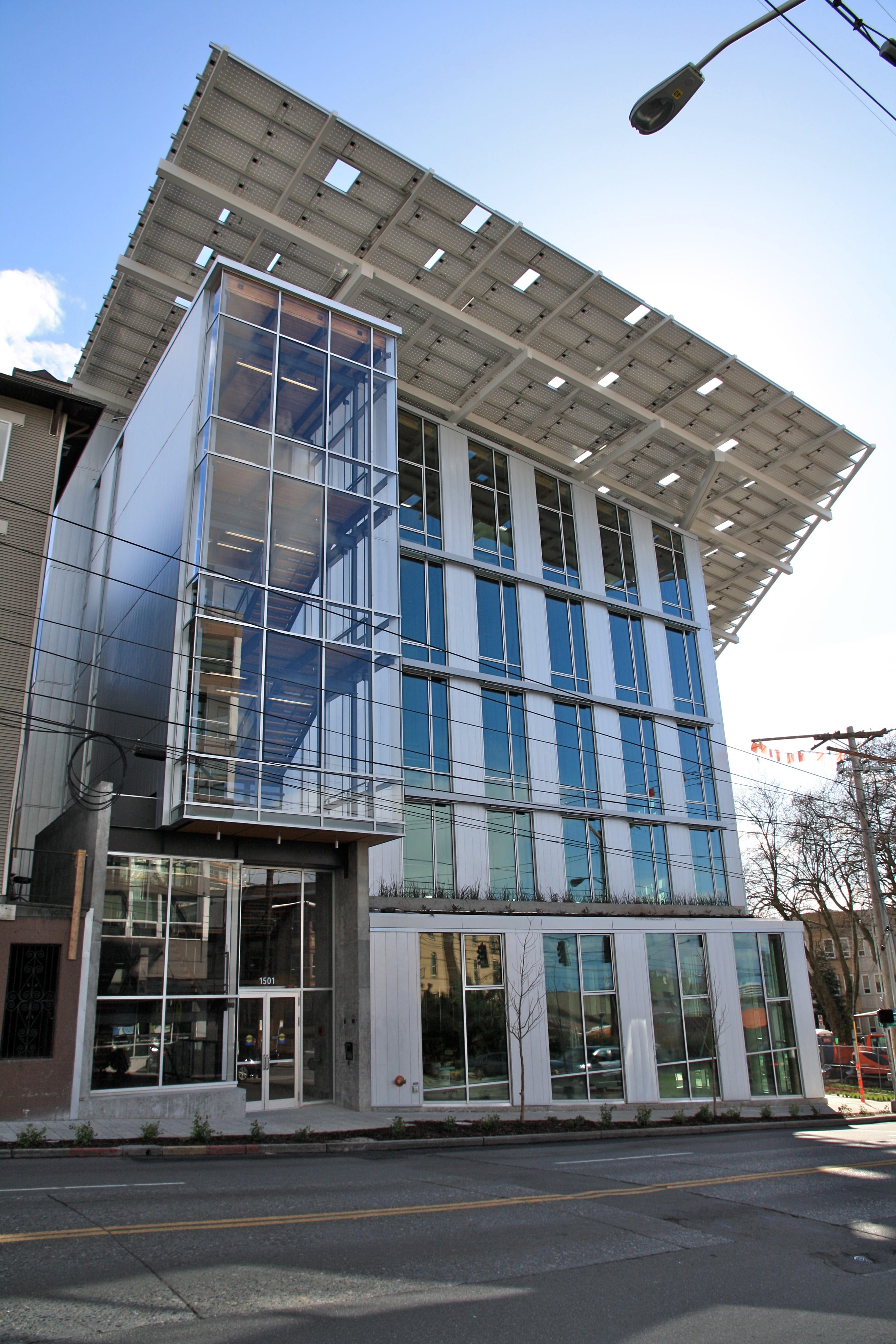
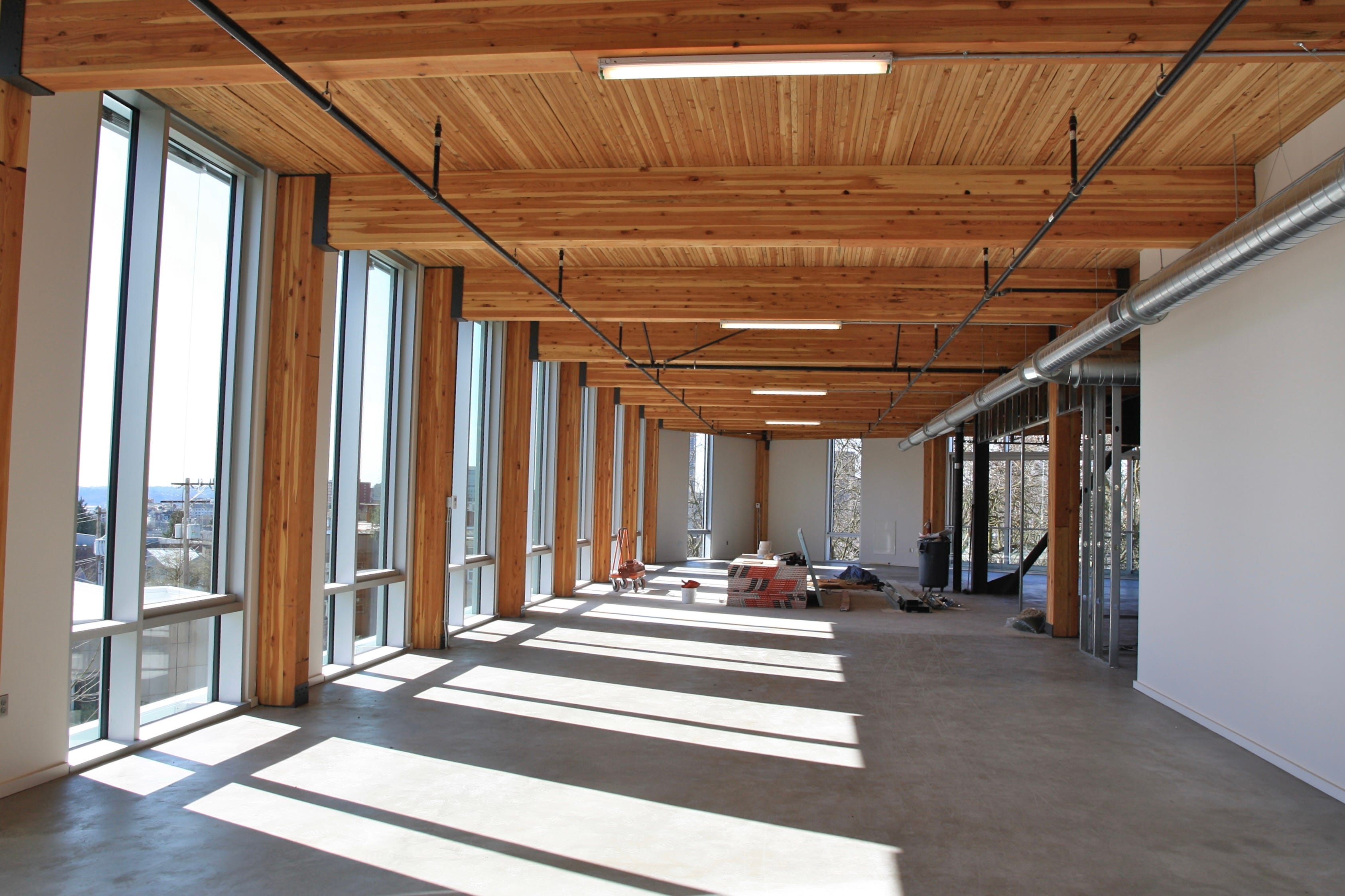
Architects and engineers choose efficiency tactics to suit America’s widely varying climate, hydrology, and geography. This is a feature, not a bug. Thus, the architecture firm Miller Hull and the mechanical and electrical engineer PAE relied almost entirely on demand reduction in the design of the Bullitt Center. It’s a 2013 office building that has been influential in demonstrating how to achieve net-zero energy since its solar array could harvest few kilowatts from Seattle’s eternal cloud cover. Among many innovative tactics, oversized triple-glazed windows draw daylight in, while keeping warmth in and undesired heat out.
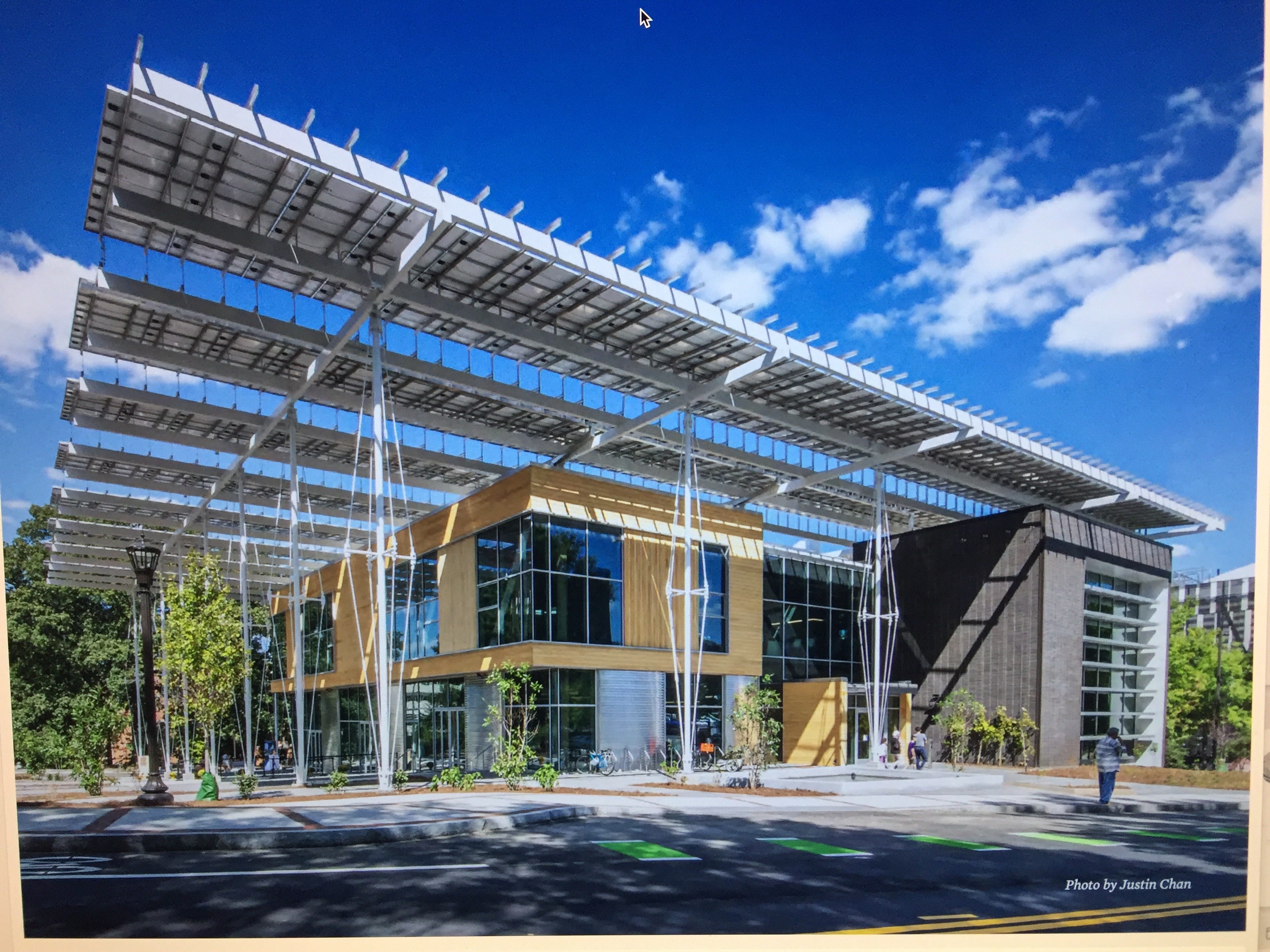
The same team brought its low-energy acumen to the Kendeda Building for Innovative and Sustainable Design at Georgia Tech. Working with local architect Lord Aeck Sargent the building bears little resemblance to Bullitt because it is attuned to Atlanta’s heat and humidity. It features a huge overhanging roof that deflects unwanted solar heat, as well as providing convivial shade in the Southern porch tradition. The design includes many tactics that reduce energy but the broad roof also hosts a massive solar array, producing 120 percent of the energy the building consumes.
Efficiency creates economic flywheels
Some regions adeptly harvest the economic advantages of green building innovation. Bullitt demonstrated the advantages of “mass timber” (wood strands glued together to form engineered columns, beams, and panels for walls and floors that replace environmentally damaging steel and concrete). This new kind of wood has become the biggest excitement in forest products since plywood. Mass timber elements were also used at Kendeda, and helped draw the attention of Southern yellow-pine producers, which have since built mass-timber manufacturing plants.
Kendeda also grew the market for Big Ass Fans, of Lexington, Kentucky, by using the industrial product instead of a tangle of ductwork to temper Atlanta’s high summer humidity. Shuco, the German manufacturer of the highly insulating windows used at Bullitt, brought its advanced manufacturing expertise to a Seattle-area window company.
Thus the variety of energy-reducing opportunities in buildings spurs economic flywheel effects as green entrepreneurs learn from each other and hatch alliances and new companies. That is one of the overlooked beauties of efficiency.
In the Midwest and Northeast, where cold-weather heating demand is high, an energy regime imported from Europe called Passive House relies on very high levels of insulation and air sealing, with 75 percent energy-use reductions readily achieved. These buildings provide draft-free comfort and quiet along with their very low operating costs. The immediate utility-bill savings have been embraced by affordable-housing developers because they stretch the tenant subsidies they receive.

Passive house was pioneered in the U.S. for single-family houses, but now is built at large scale, such as in the full-block Sendero Verde development, in East Harlem, that includes 709 apartments serving tenants earning a range of incomes in three structures, one of which rises to 34 stories
America reaps too few of the economic benefits of efficiency because the majority of green building products are manufactured in countries that have consistently supported robust low-energy technologies—Germany, Japan, Korea, and increasingly China, according to Floris Keverling Buisman, CEO of 475 Performance Building Supply, a green building-tech specialist. The U.S. has let its once-formidable leadership in lighting, glass, glazing, and insulation languish over decades.
America is reshoring some capacity—no thanks to Congress or the current administration. Miller Hull (of Seattle) and PAE (Portland, Oregon) are just two firms in a cluster of green-building architects and engineers (including the U.S. beachheads of some European experts) that is growing in West Coast cities. Passive House has nurtured low-energy design and construction expertise from Boston to Minneapolis.
Colorado offers incentives to modular builders, who can deliver high quality energy-efficient construction in quantity at competitive cost. “Weatherization,” a catch-all term for improving efficiency in drafty old houses, can be more effectively incentivized to strengthen the poorest communities and the most needy regions.
We are supposed to be dazzled by hydrogen as a fuel, the resuscitation of nuclear fission, the development of nuclear fusion, the cramming of carbon into the ground, or the chemical seeding of clouds (in service to the arrogant goal of engineering the world’s climate)—all touted as energy cure-alls that people who find efficiency dull insist require an enormous Manhattan-project effort.
These visionary technologies could be transformative but each comes with its own costs and requires its own suite of incentives and regulations. Each comes with downsides that need to be thoroughly understood and accounted for. Only then can viable visionary energy tech go mainstream.
Efficiency is now, it’s proven, and its ready to do the job. Time to give it its due.
Thanks for these helpful comments. I got many others directly, so clearly this is meaningful to folks. Cheers,
This is great James, i am so tired of supply side solutions and have talked for years about demand side. And I have been to both Bullitt and Kendeda and use them as examples, thank you for doing this